Introduction
Solidity, a statically typed programming language popularly known for writing smart contracts on Ethereum, employs several advanced features to ensure seamless and effective blockchain coding. One such feature is the 'Function Selector'. It is an essential part of the Ethereum function invocation process, contributing significantly to the efficient execution of smart contracts. Let's delve deeper into the concept to understand what function selectors are and how they work.
What is a Function Selector?
Function selectors are an integral part of the Application Binary Interface (ABI), the standard way to interact with contracts in the Ethereum ecosystem, both from outside the blockchain and for contract-to-contract interaction.
A function selector is a four-byte identifier determined through the Keccak (SHA-3) hash of the function's signature. The function signature is derived from the function name and the parenthesized list of parameter types. For instance, the function signature for a function named myFunction that takes an address and a uint256 would be myFunction(address,uint256).
The primary use of a function selector is to determine which function to call when multiple parts are present in a contract. In Ethereum, when a function call is made from an external source, it sends a data payload. The first four bytes of this payload contain the function selector, while the remaining bytes are reserved for any function arguments.
How Do Function Selectors Work?
Function selectors aim to encode the information about the function being called. When a contract is called, the EVM (Ethereum Virtual Machine) reads the first four bytes of the provided data to determine the function selector. The EVM uses this selector to match it with the correct function within the contract. If a match is found, the function is executed. If no match is found, the function call fails.
This function selection mechanism enables the contract interface to be highly flexible. New functions can be added without disturbing the existing ones, and function calls can specify precisely which function they intend to invoke.
Function Selectors in Practice
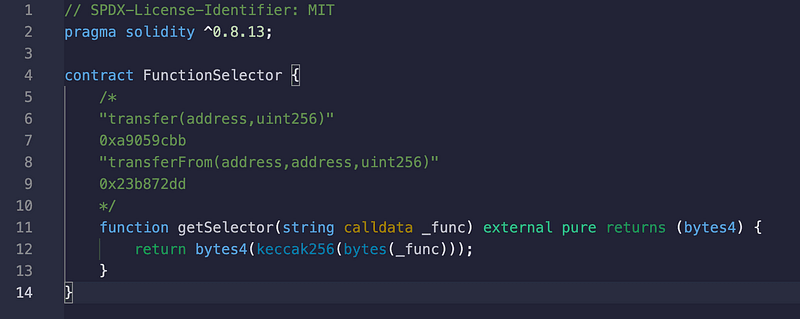
Let's consider an example to understand function selectors better: